Routing · 2026-11-24 · 4 min read
Unlimited Signal Routing: Tapping Any Outlet Into Any Bus
Why fixed channel strips choke sound design — and how Perception lets you tap internal module outlets straight into sidechained stereo buses.
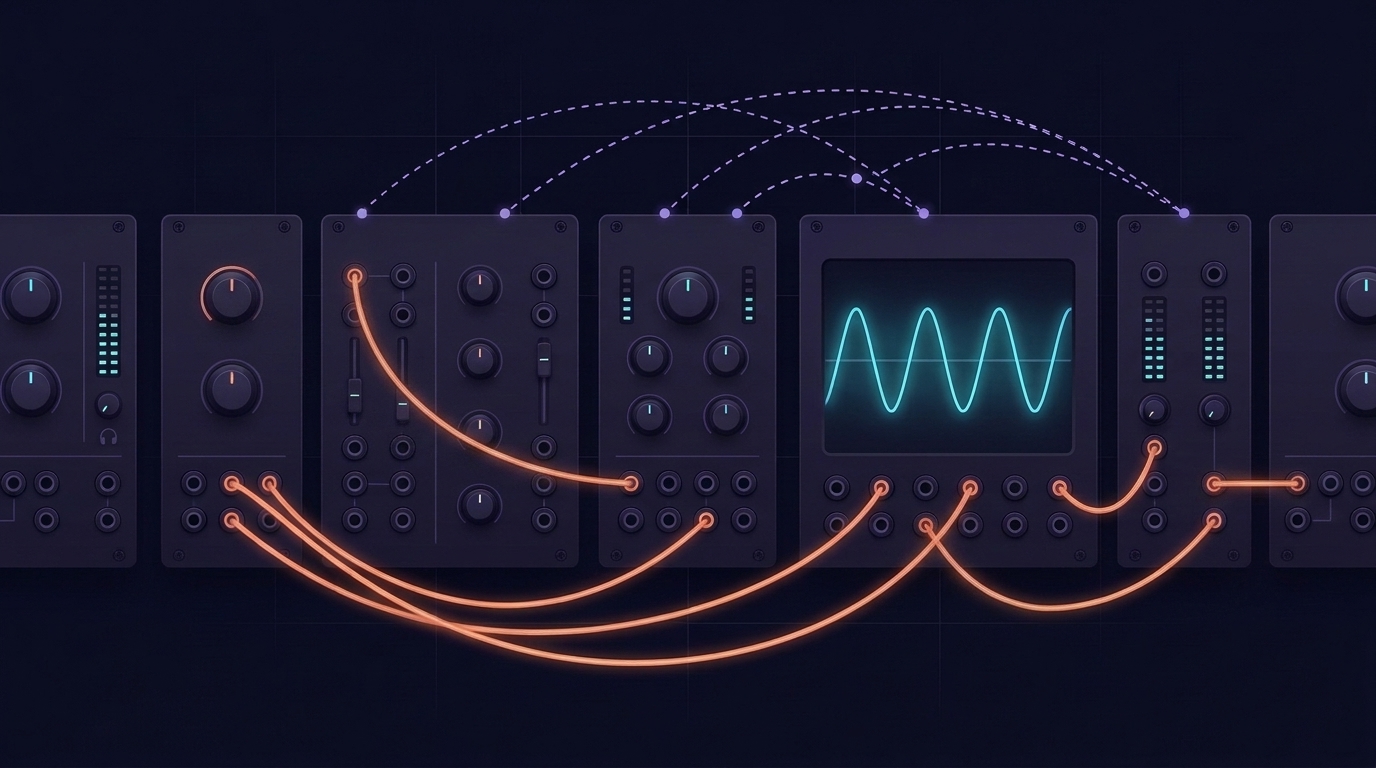
Most DAWs force a hard wall between your synth patch and your mixer. Once audio leaves an instrument, you get one stereo pair and a fixed stack of inserts.
Perception removes that wall. Every track is a typed signal graph, and any internal module outlet can tap straight into any stereo group bus while its dry cable keeps running.
Real example: Rivet Pulse
In Silt Relay (138 BPM), the Rivet pulse track splits a MIDI-driven voice through a stereo delay, channel swap, and three parallel paths simultaneously:
- Dry chain →
Objectsstereo bus for crisp transient glue. - 6% outlet tap from the channel-swap node →
Undertowbus, where the pressure kick keys a 4:1 sidechain compressor. - 19% Space send → stereo reverb return that breathes between offbeat hits.
Graph-checked, never fragile
Every connection is validated for signal rate, channel layout, and feedback cycles before it commits. Nested stereo buses can feed other stereo buses with live cycle detection — and when you drop Perception as a VST3 plug-in inside another DAW, that entire internal routing graph travels with your patch.