Hardware · 2026-11-11 · 4 min read
From Patch to Pedal: Perception as a Hardware Synth Factory
Bind your modular patch to a typed hardware profile and run the exact same DSP engine on a dedicated Raspberry Pi 5 pedal or desktop synth.
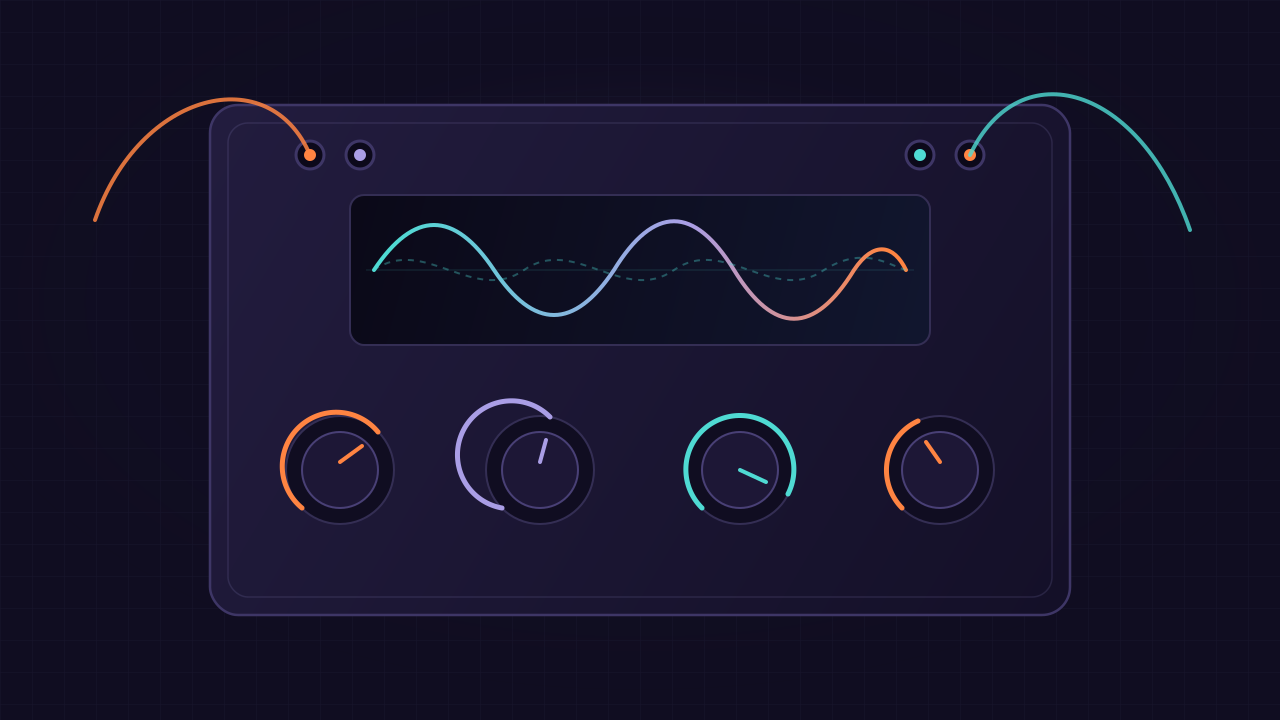
Why rebuild a synth from scratch in C++ every time you want a physical instrument on your desk or pedalboard?
Perception is the factory. A hardware box — whether a 4-knob granular pedal or a 16-knob desktop poly synth — is just a typed device profile declaring its physical encoders, switches, audio I/O, MIDI ports, and CPU budget.
One engine, three surfaces
- Patch in Perception (standalone or as a VST3 in your DAW): wire waveguides, 16-voice grain clouds, spectral pitch shifters, and formula melodies.
- Map to a device face: pick a hardware profile and bind macros to real physical knobs with proved monotone curves.
- Run untethered on Linux hardware: the reference Raspberry Pi 5 + Perception HAT runs the exact same engine on an isolated CPU core at
SCHED_FIFOpriority, direct ALSA 64-frame periods (< 10 ms bound), locked memory, and a hardware watchdog with relay bypass.
Design an instrument once. Play it in your studio, load it as a VST3, or gig it in an anodized enclosure with no laptop in sight.